Catalonia, Aragon & Navarre · The story behind
The story behind Cardona: a castle, a siege and the legend of room 712
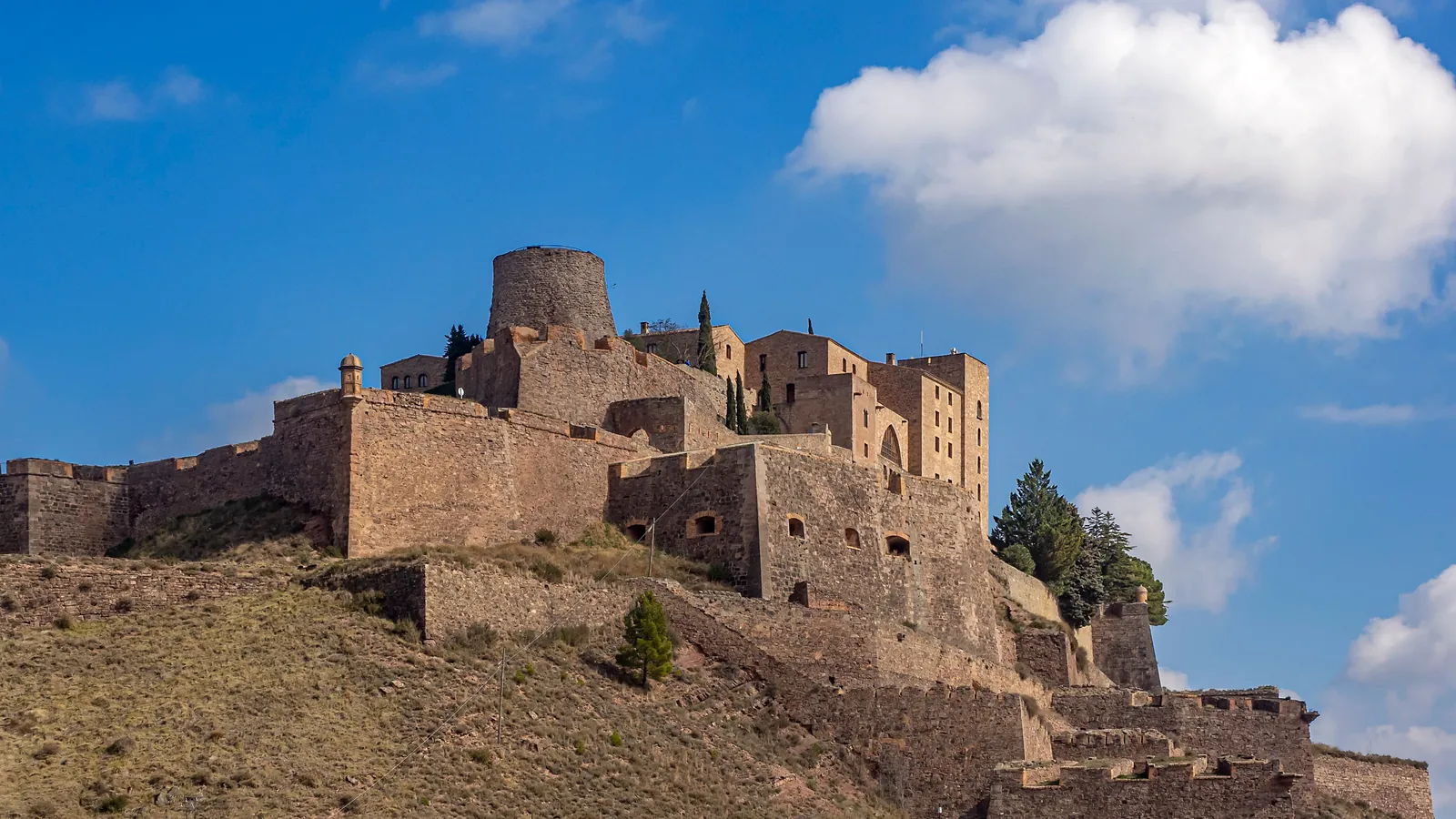
Cardona castle in Catalonia is now a parador. What the records show, what the legend of room 712 adds, and what a winter stay involves.
I don’t believe in ghosts, but I do believe in a good paper trail. The Cardona castle parador in Catalonia has both: a well-documented fortress history, from a ninth-century foundation to a surrender on 18 September 1714, and a legend of a maiden in the Minyona tower that has lately acquired a room number, 712. The history is real. The legend is a legend, dated by the Catalan government to the eighteenth century. And room 712 turns up in the Spanish press, not in the parador’s own telling of the story. Which is, I think, exactly the sort of thing worth separating out before you pack a jumper.
Cardona castle history: what the records show
From Wifred the Hairy to the dukes
The castle is traditionally dated to 886, when it was built under the command of the Count of Barcelona, Wifred the Hairy (Guifré el Pilós). That is the date the Generalitat gives, and it is a conventional one. The Gran Enciclopèdia Catalana gives a conventional range of 880 to 886, and the author of its entry suggests the real settlement may be a few years earlier. It also records an order from Louis the Pious to refortify a deserted castle on the site in 798, which did not last. So: ninth century, yes; a neat year on the dot, take it with a pinch of salt.
What survives of that first building is the Minyona tower, according to the Generalitat the only remaining element of the ninth-century castle. Its charter of settlement is among the oldest in Catalonia. Towards the end of the tenth century the viscounts of Osona made it their residence, and the title shifted to Cardona. The county was created in 1375 by Pere III for Hug II, and in 1491 Ferdinand the Catholic erected the duchy of Cardona for Joan Ramon Folc. In 1516 Duchess Joana Folc married Alfons d’Aragó. The family stopped living in the castle in the second half of the sixteenth century.
Sant Vicenç, consecrated 1040
Inside the walls stands the collegiate church of Sant Vicenç, begun under Viscount Bremon (d. 1029) and consecrated on 23 October 1040 by the bishops of Urgell and Roda. It is counted as an early example of first Romanesque in Catalonia: a three-nave basilica with a domed transept, three apses, Lombard arcading and a crypt. It had secular canons from 1592, was turned into barracks in 1794, lost its collegiate community in 1851, and was declared a National Monument in 1931, with restoration from 1949.
The 1711 siege and the 1714 capitulation
The castle’s reputation for never falling rests on a siege of more than forty days in autumn 1711, which it survived. Cardona had backed Archduke Charles in the War of the Spanish Succession, and a ring of bastions, begun in the early 1690s after the Reapers’ War, had given it more than seventy guns by the early eighteenth century.
Then came the end of the war. Barcelona capitulated on 11 September 1714, and the governor, Colonel Manuel Desvalls, surrendered the castle on 18 September 1714. The Generalitat describes it as the last bastion in which the Catalans defended their sovereignty. The capitulation ran to 23 chapters and let the defenders go to Italy; the Bourbon authorities did not later honour the terms. So the line that Cardona was «never taken by force» is true as far as it goes. It was taken by paper, which is how most castles are lost.
Soldiers until 1903, then a parador
The castle stayed a stronghold through the French Revolutionary Wars, the Peninsular War and the Carlist Wars. Most batteries were removed in 1890 and the garrison withdrew in 1903. The Minyona keep, once round and about 25 metres high, was cut down between 1794 and 1810. The buildings later became a parador, and in 2010 it was presented as the first parador-museum in Catalonia, with 25 panels on the history of the site from the eleventh century to today. Orson Welles filmed part of Chimes at Midnight here in 1965, using the castle, cloister and collegiate church.
The legend of Adalés and the Minyona tower
Here the tone changes, and so should we. The story goes that a nobleman’s daughter, Adalés, fell in love with a Muslim prince, Abdalá, invited to the castle to seal an alliance. Her father had the prince killed and shut his daughter in the round tower, where she died. The tower is called the Minyona, the maiden, because of her. That is the version in the parador’s 2025 blog post, and it is the one I’d call the standard text.
The date of the legend is the awkward part. The Generalitat’s visitor guide says the tower’s name comes from an eighteenth-century legend, about a viscount’s daughter and a Moorish prince. One press version sets the story in the eleventh century, and the press and the parador call the father a duke. But the duchy of Cardona was only created in 1491, so a duke in an eleventh-century tale is an anachronism, and the Generalitat’s viscount is the likelier title. The details wander elsewhere, too: in one telling the prince is killed, in another he lives and the duke declares war on him.
Tradition has it, in the press versions, that the prince’s ghost rides at midnight from the tower to the salt mountain. That one I’d file under garnish.
The legend is old enough to have a name attached to a tower, and the Generalitat places it in the eighteenth century. A lovely tale. Not evidence of anything about the ninth century.
Room 712: fact or folklore?
Now the number. Spanish press, notably a Guía Repsol article first published in 2016 and updated in 2024, and El Debate in 2024 and 2025, describe room 712 as a room where guests report restless nights and noises. Repsol places it in the west wing of the seventh floor and adds that cleaning staff are said to go in in pairs and that the room is only available on explicit request. El Debate adds moved furniture and tells the story with a party at the castle, a blind and deaf-mute servant and a duke who relents too late.
The press pieces give no source. And the parador’s two blog posts (2013 and 2025) tell the Adalés and Minyona story without mentioning room 712 at all. They do not quite agree with each other: the 2013 post has a viscount’s daughter and a Moorish jailer from Maldà who converts. That does not make the press versions false; it means the room number belongs to the tourist-and-press layer of the tale, not to anything the parador itself documents. If you want to ask for the room, ask by all means. I would, if only to see the face of whoever is on reception. But book it as a room, not as an investigation.
In short:
- Documented: 886 (conventional) foundation, Sant Vicenç in 1040, the 1711 siege, the 1714 capitulation, military use to 1903.
- Folklore: Adalés and the Minyona, dated by the Generalitat to the eighteenth century.
- Press, not parador: room 712.
Staying at the Parador de Cardona in winter
The parador was renovated and reopened in May 2025, after being closed from June 2024. The works included roofs, exterior windows and doors for better insulation, new lifts, wifi, and showers in place of baths in eight rooms. No closure for this winter had been announced in October 2026; I’d still check parador.es before you reserve, because a parador that is open in one season is not guaranteed to be so in the next. If you are weighing other state-run historic stays, Portugal’s pousadas face the end of their operating concession this winter.
For room rates and the restaurant, check parador.es.
Visiting the castle if you aren’t a guest
You don’t have to sleep in the castle to see it. The castle and the collegiate church are open to ticketed visitors, and in winter, from 1 October to 31 May, the castle opens Tuesday to Sunday, 10:00 to 17:30, with the ticket office closing 30 minutes earlier. It is closed on non-holiday Mondays and on 25 and 26 December, 1 January and 6 January. Entry is €6, or €4 reduced (about £5.20 and £3.50), free under 16, and free on the last Tuesday of each month from October to June (price as listed by the Generalitat; confirm before you go). Non-guided tours are listed at 10:30, 11:30, 12:30, 15:30 and 16:30. The castle visit is ticketed separately. If you are staying, ask the parador whether a reduction applies.
Some of the guided and dramatised visits run by the Fundació Cardona Històrica are seasonal; do not count on an evening ghost tour in November.
The Salt Mountain
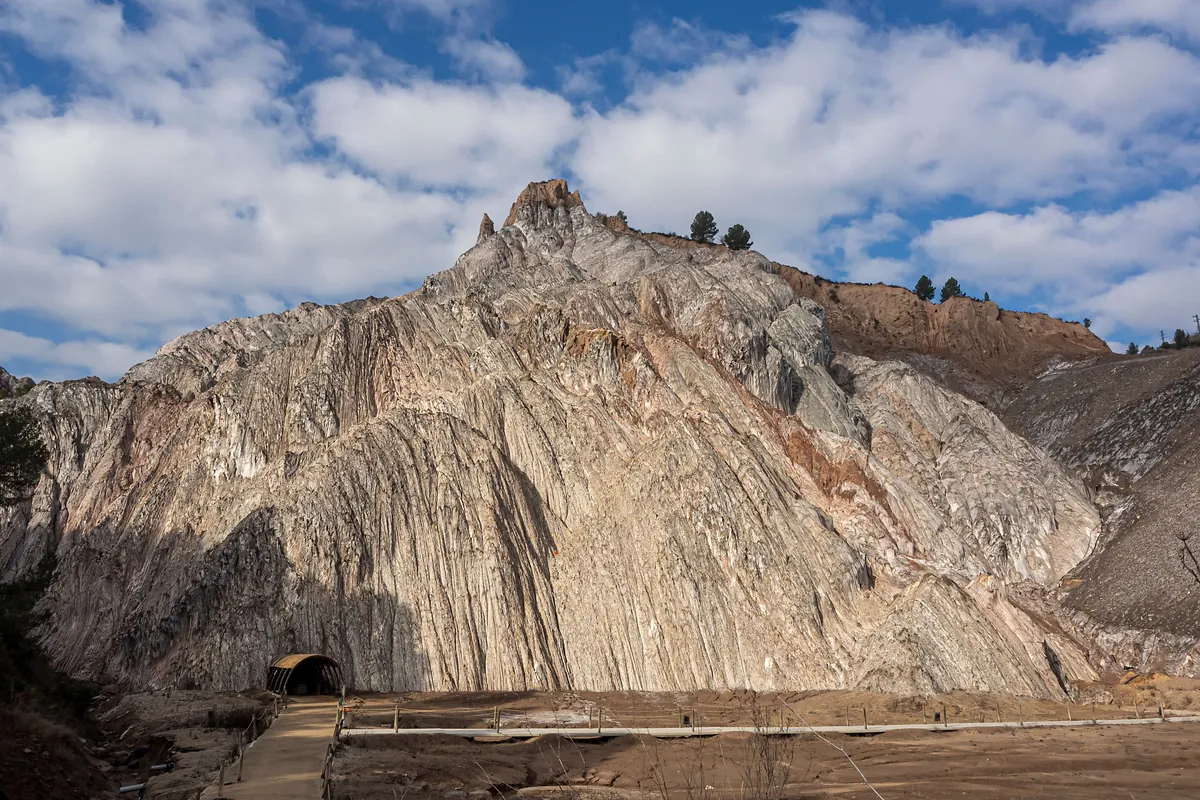
A short distance away, the Salt Mountain (Muntanya de Sal) is a cultural park built around a potash mine of about 100 hectares, with open-air mining going back to the Neolithic and extraction from 1900 to 1990. It has guided visits and a café-restaurant. Winter hours and prices are best confirmed with the park or the Cardona tourist office. It is the sort of thing that makes a second half-day: castle in the morning, salt in the afternoon.
If you like this sort of out-of-season history, the Abruzzo stone village of Santo Stefano di Sessanio makes a good companion piece, and the whole series lives under The story behind.
Getting to Cardona without a car
There is no railway station in Cardona. The simplest way from Barcelona is the Alsa coach on the Barcelona to Andorra line, which stops in the town; the journey takes about two hours, and the Cardona tourist office speaks of four departures a day, although the number may be different at weekends and on holidays. Look up the winter timetable on alsa.es rather than trusting me or anyone else’s memory.
The alternative is to take a train to Manresa, about 30 km away, which has rail service and local buses on to Cardona. The Cardona Turisme page on how to arrive sets out the options, along with the free car park at the castle for those who drive.
Then there is the last stretch: the castle stands on a hill above the town, and I would ask the parador or the tourist office about the walk or a taxi before you arrive with luggage.
Is Cardona worth it in winter? A dry verdict
For anyone who likes their history served with a paper trail, yes. It has a documented foundation, a Romanesque church that has stood since 1040, and a 1714 capitulation you can read about in the official records, all inside a building you can sleep in. The legend adds colour and, on the evidence, no more; room 712 is an excellent reason to chat to reception and a poor reason to reserve a bed. If you would like to know how I weigh these things, About explains what I check and what I leave out.
Skip it if you are after a ghost with a confirmation number. The ghost, I suspect, has better things to do in November.
Opening times and prices change: confirm them on the official pages listed above.
Fact or folklore?
Cardona castle is traditionally dated to 886 under Wifred the Hairy; its collegiate church of Sant Vicenç was consecrated in 1040, and the garrison surrendered by capitulation on 18 September 1714.
The tale of Adalés, a nobleman's daughter shut in the Minyona tower for loving a Moorish prince, is dated by the Generalitat to the 18th century; the link to room 712 appears in Spanish press, not in the parador's two blog posts on the legend.
Worth it for anyone who likes a castle with dates to match; skip it if you came for the ghost.Getting there off-season
- By bus
- There is no railway station in Cardona. A regular Alsa coach on the Barcelona to Andorra line stops in the town; check alsa.es for the winter timetable (checked October 2026).
- Via Manresa
- Manresa, about 30 km away, has train and bus services, with buses on to Cardona. The Cardona tourist office lists the options.
- By car
- The castle has a free outdoor car park.
- Last stretch
- The castle stands on a hill above the town; ask the parador or the tourist office about the walk or a taxi before you set off.
Questions people ask
Can you visit Cardona castle if you are not staying at the parador?
Yes. The castle and the Sant Vicenç collegiate church are open to ticketed visitors, and in winter (1 October to 31 May) the castle opens Tuesday to Sunday from 10:00 to 17:30. It is closed on non-holiday Mondays and on 25 and 26 December, 1 January and 6 January. Check the current times before you travel.
What is the legend of room 712 at the Parador de Cardona?
Spanish press, notably Guía Repsol, tells of a room on the seventh floor said to give guests restless nights, linked to the tale of Adalés and a Moorish prince. The parador's two blog posts (2013 and 2025) tell the story of the Minyona tower but do not mention the room number. Treat it as folklore.
Has Cardona castle ever been taken by force?
Not according to its reputation, which grew from a siege of more than forty days in autumn 1711 that the castle withstood. It did surrender, though: after Barcelona fell on 11 September 1714, the governor Manuel Desvalls negotiated a capitulation on 18 September 1714.
How do you get to Cardona from Barcelona without a car?
Take the Alsa coach on the Barcelona to Andorra line, which stops in Cardona; the journey takes about two hours. Alternatively go by train to Manresa and take a local bus on. Check alsa.es or the Cardona tourist office for winter times.